Mock Interviewer
Ask Coach
Tap a question to start, or type your own below.
Booking Waitlist System Design
Visual Problem Diagram
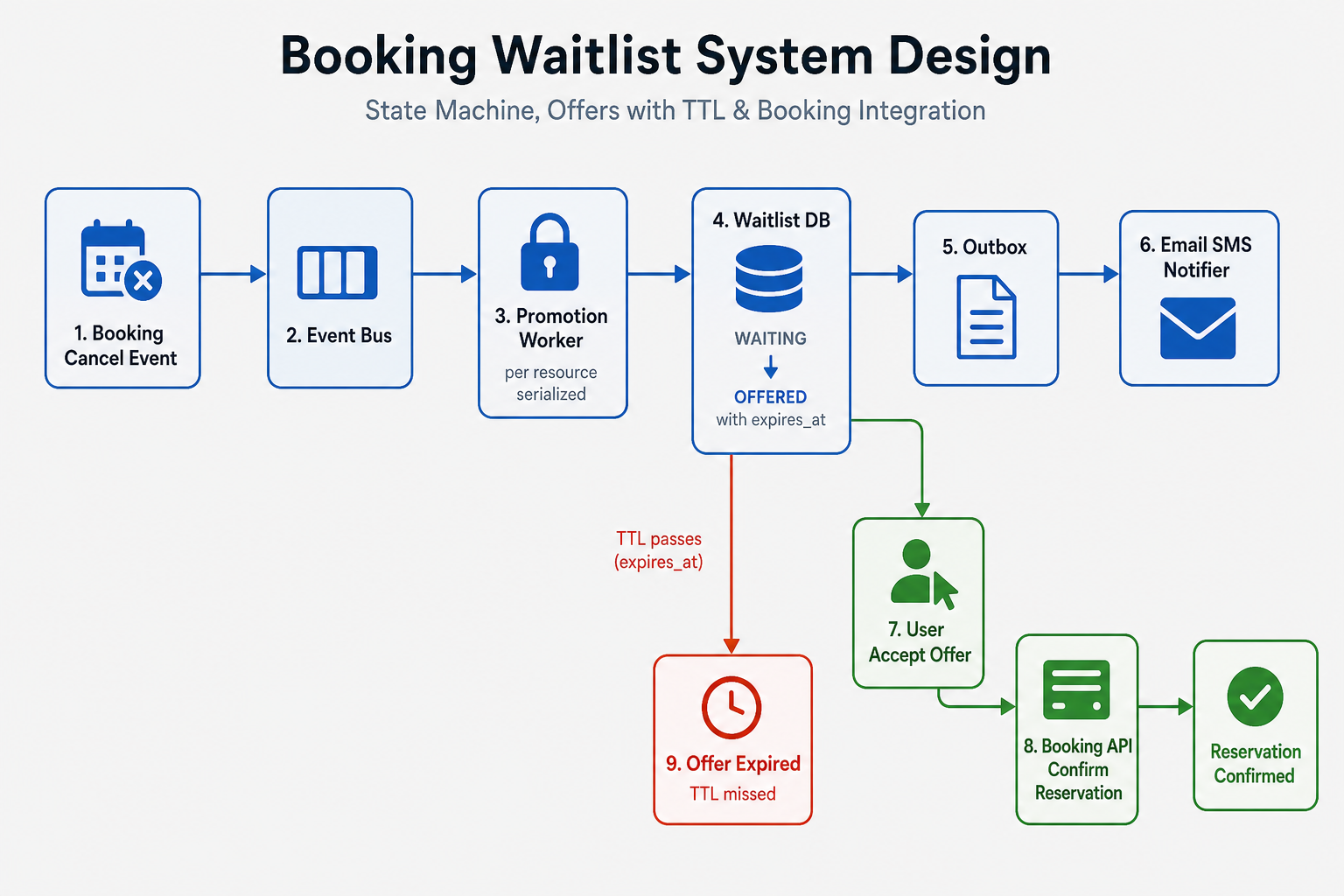
Scenario
Picture a concert that sold out in ten minutes, and you are one of thousands of people who joined a waiting list in case someone cancels. Days later a single ticket comes back. The venue wants to offer it to whoever has waited the longest, give that person a short time to say yes, and move on to the next person if they do not answer. The system that runs this list is called a booking waitlist. The painful failure is when two people are both told the same ticket is theirs, because the messages went out before either answer came back.
Clarify this problem here, or open Pathway Coach if you want a prep plan first.
This problem asks you to design a booking waitlist, which is the line a person joins when something they want to book, such as a concert seat, a clinic slot or a hotel room, has sold out. People can join the line and leave it again. When someone cancels, the next person in line is offered the freed spot, and that offer only lasts for a short time. They are told about the offer by a message. They can accept it or decline it, and if they do nothing the offer runs out and the spot goes to the person after them. An accept turns into one real booking.
In the interview you need to explain five things. First, who gets the next spot when one is cancelled, and how you can prove it was fair. Second, how one cancelled spot becomes exactly one open offer, even if two parts of the system notice the cancellation at the same moment. Third, how an ignored offer moves on to the next person without losing the spot. Fourth, how two taps on Accept still create only one booking. Fifth, what the person sees when the text message arrives after the offer is almost over. A public, exact position number such as “you are number 412” matters much less, so mention it briefly and move on.
Constraints
A person can join or leave the waitlist. When a spot frees up, the next person gets an offer that expires. They are notified. They can accept or decline. An ignored offer expires. An accept creates one booking.
The line follows a rule you can say out loud, such as earlier waiters first. One spot is never booked twice. An offer stays open for about 5 to 30 minutes. Tapping Accept twice still creates one booking. A notification can be sent again if the first try fails.
A hot show can have hundreds of thousands of people waiting. Cancellations can arrive in a burst. The message provider limits how fast you can send. Bots try to grab a better place in line.
Stages ahead
Not ready to design yet?
Try the free Coach trial — ask how to prep, what to practice first, or how InterviewCrafted works. Sign in when you want to start this problem.
Log in to start practicing
Preview the problem below. Sign in to start your timed session, save progress, and use the AI coach.
Want full access now? View Pro pricing